
— How to Build a Custom Marketplace:
A Booking Engine with Complex Resource Rules
Mapping complex matrices where supply (service providers) and demand (customers) must interact dynamically with real-time variables.
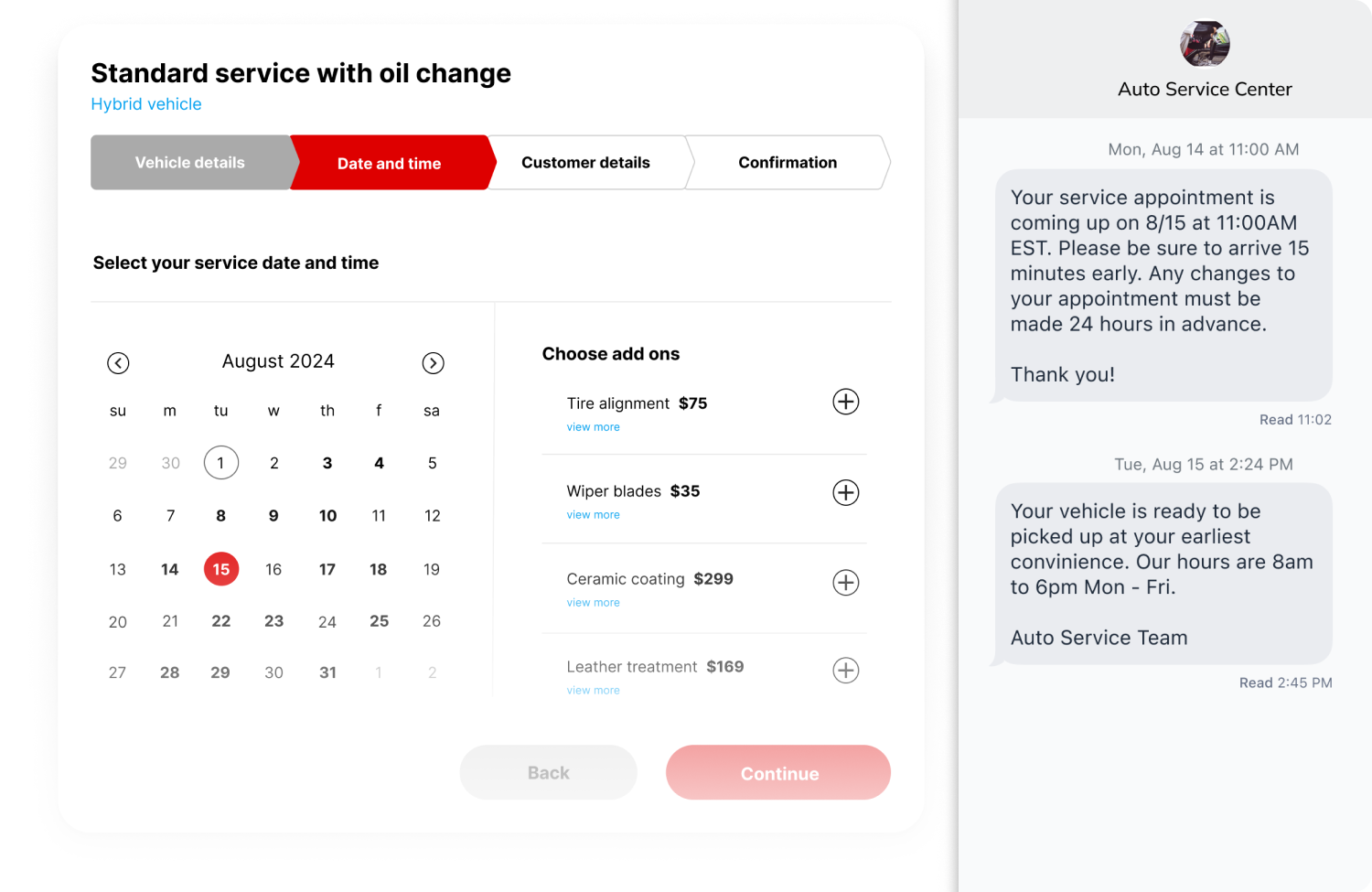
Building a two-sided marketplace—whether it is an “Uber for healthcare practitioners,” an “Airbnb for industrial equipment,” or a network for expert tutors—introduces intense transactional complexity. Unlike standard SaaS scheduling where you map availability against a static, internal workforce, marketplace engineering requires coordinating an independent, volatile supply layer with an unpredicted demand layer in real time.
If your backend treats marketplace matching as a basic calendar lookup, your platform will suffer from structural failures: double-bookings due to race conditions, poor liquidity from unoptimized routing, and user churn caused by slow API response times.
To scale successfully, your system must treat scheduling as a dynamic resource optimization and allocation problem. This blueprint outlines the technical architecture needed to build a high-performance marketplace scheduling engine using Periodic’s headless infrastructure layer.
1. The Architectural Topology of a Two-Sided Marketplace Engine
A marketplace engine must ingest real-time data from independent supply environments, apply custom regional constraints, and output predictable, bookable vectors to the demand front-end.
 [ DEMAND LAYER ] ──────────────────► Inbound Search (Address, Service, Time Window)
                                              │
                                              ▼
                             ┌──────────────────────────────────┐
                             │  API GATEWAY / ROUTING ENGINE     │
                             └────────────────┬─────────────────┘
                                              │
                    ┌─────────────────────────┴─────────────────────────┐
                    ▼                                                   ▼
       ┌─────────────────────────┐                         ┌─────────────────────────┐
       │   SUPPLY-SIDE FILTERS   │                         │  OPERATIONAL RULES TIER │
       ├─────────────────────────┤                         ├─────────────────────────┤
       │ • Geo-Radial Enclaves   │                         │ • Custom Margin Markup  │
       │ • Real-Time Calendar Sync│                         │ • Minimum Travel Buffers│
       │ • Dynamic Skill Tagging │                         │ • Multi-Resource Locks  │
       └─────────────────────────┘                         └─────────────────────────┘
                    │                                                   │
                    └─────────────────────────┬─────────────────────────┘
                                              │
                                              ▼
                                 [ PERIODIC MATCHING ENGINE ]
                                              │
                                              ▼
 [ ATOMIC BOOKING STATE ] ──────────► Optimistic Mutex Lock ──► Stripe Escrow Capture
2. Resolving Multi-Variable Matchmaking Payloads
When a customer searches for a service provider on your platform, your API must filter through thousands of supply profiles within milliseconds. It converts geographical, temporal, and capability variables into a structured matrix of available options.
The Headless Matchmaking Request
To query open inventory within a specific geographical enclave, your application framework issues a structured POST request to the core matching coordinator:
POST [https://api.periodic.is/v1/marketplace/match](https://api.periodic.is/v1/marketplace/match)
{
  "marketplace_id": "mkt_tutoring_network_global",
  "demand_parameters": {
    "customer_id": "cust_student_8820",
    "target_coordinate": {
      "latitude": 30.2672,
      "longitude": -97.7431
    },
    "timezone": "America/Chicago"
  },
  "service_requirements": {
    "category": "advanced_calculus",
    "delivery_method": "in_person",
    "window_start": "2026-09-10T09:00:00Z",
    "window_end": "2026-09-12T18:00:00Z"
  },
  "supply_constraints": {
    "geofence_radius_miles": 15,
    "provider_rating_floor": 4.7,
    "required_language_tags": ["en_us", "es_mx"]
  }
}
The Engine’s Resolved Liquidity Output
The engine calculates travel matrices, matches language and capability tags, audits real-time availability over standard calendar connections (e.g., Google Calendar/Outlook integrations), and provides a clean, ranked response payload:
{
  "status": "success",
  "matches_found": 2,
  "results": [
    {
      "provider_id": "prov_tutor_alex_09",
      "distance_miles": 3.4,
      "hourly_rate_gross": 75.00,
      "marketplace_take_home": 15.00,
      "available_slots": [
        {
          "start": "2026-09-10T14:00:00-05:00",
          "end": "2026-09-10T15:30:00-05:00",
          "match_token": "tok_mkt_match_99a8b7"
        }
      ]
    },
    {
      "provider_id": "prov_tutor_maria_55",
      "distance_miles": 7.1,
      "hourly_rate_gross": 90.00,
      "marketplace_take_home": 18.00,
      "available_slots": [
        {
          "start": "2026-09-11T10:00:00-05:00",
          "end": "2026-09-11T11:30:00-05:00",
          "match_token": "tok_mkt_match_11c2d3"
        }
      ]
    }
  ]
}
3. Mitigating Marketplace Fluidity and Transaction Risk
A successful marketplace requires maintaining strict database safeguards to protect platform integrity during transaction orchestration.
Architectural Safeguards for Multi-Sided Platforms
| The Marketplace Challenge | The Technical Resolution Architecture |
| Provider Calendar Bleed: A service provider books a dentist appointment on their personal Google Calendar, but your app doesn’t know, leading to a double-booking. | Sub-Second Bi-Directional Webhook Sync: Periodic maintains a constant, live synchronization pipeline with each provider’s external calendar. Any structural schedule modification triggers an atomic update across your app’s availability vectors in milliseconds. |
| The “Ghost Booking” Conflict: Two platform customers attempt to book the exact same provider for the exact same slot at the identical moment. | Optimistic State Locks: The marketplace engine places a 5-minute database lock on the match_token when the consumer initiates checkout. This reserves the provider slot while handling downstream multi-split payment workflows (e.g., Stripe Connect) before formalizing the record. |
| Dynamic Escrow Split Routing: Managing complex transactional payout splits between the provider’s fee, the platform’s commission, and localized sales taxes. | Event-Driven Hook Orchestration: Upon successful transaction processing, the engine emits a cryptographic metadata payload (booking.confirmed) containing precise billing breakdowns, enabling seamless settlement routing through your chosen financial rails. |
4. Scaling Complex Supply Networks with Compound Rules
As your platform scales, you will encounter scenarios where provider availability is bounded by compound dependencies rather than basic shift logs.
The Compound Dependency Constraint: A mobile healthcare van cannot fulfill an appointment unless a certified nurse is on board, a specific diagnostic device is loaded, and the location sits within a 30-minute drive-time radius of the vehicle’s preceding engagement block.
Periodic’s data layers allow you to model these relationships using Compound Resource Hierarchies. Developers can group independent supply blocks into virtual clusters. When an end consumer initiates a query, the platform processes the collective resource matrix as a unified unit, ensuring your operational teams never deploy an under-resourced or physically impossible appointment.
Marketplace Infrastructure Evaluation Checklist
Ensure your backend engine is built to support the transaction velocities required of top-tier consumer networks:
-
[ ] Can your database scale to filter thousands of provider profiles based on skills, ratings, and location parameters in sub-second speeds?
-
[ ] Does your platform hold a temporary state lock on a provider’s slot during checkout to prevent double-booking race conditions?
-
[ ] Do you have live, bi-directional calendar synchronization paths built in to catch provider schedule changes instantly?
-
[ ] Can your booking architecture scale to handle multi-tiered resource rules, matching staff, rooms, and physical hardware concurrently?
Ready to bring your brand experience in line?
Talk to our team to learn more about building your brand experience with Periodic’s booking platform.